Decision Intelligence for
Smarter Business Outcomes

Make faster, smarter business decisions with AI-powered Decision Intelligence that predicts outcomes, reduces risk, and recommends the best course of action in real time.
Anticipate. Act. Optimize

What is Decision Intelligence?

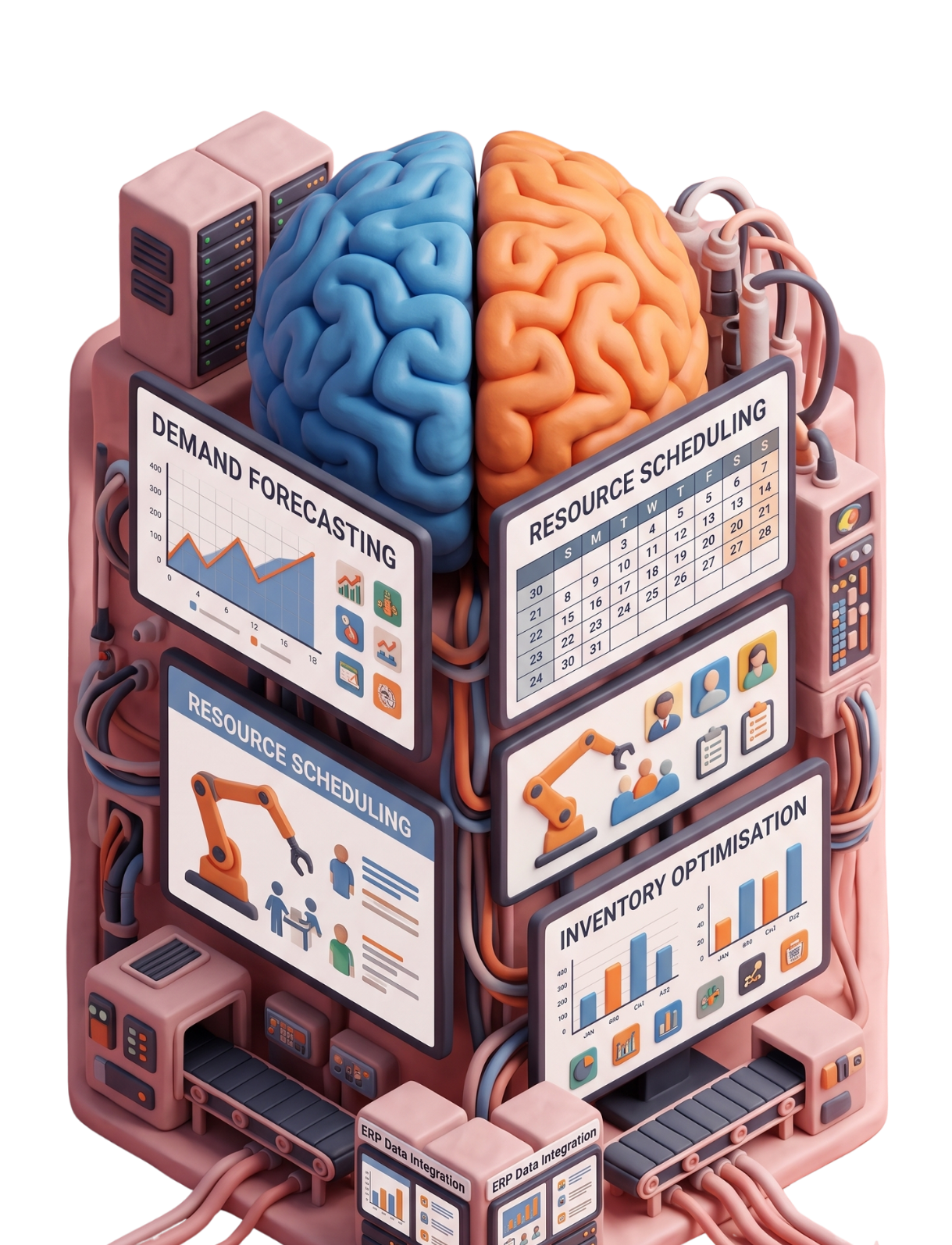
Decision Intelligence is an AI-powered decision support system that combines predictive analytics, business data, and machine learning to help organizations make smarter, faster, and more accurate strategic decisions.

It goes beyond dashboards and reports by transforming enterprise data into actionable recommendations.

Predict

Forecast revenue, demand, risk, and performance trends before they impact your business.

Optimize

Identify the best possible actions using AI-driven scenario modeling and data analysis.

Simulate

Test multiple business scenarios and evaluate outcomes before making critical decisions.

Improve

Continuously refine decisions using real-time data and adaptive machine learning models.
Document To Insight

How Decision Intelligence Works

Mockup

1.Data
Unification

Connect ERP, CRM, supply chain systems, financial software, IoT data, and operational databases.
Mockup

2.Predictive Modeling

AI models analyse patterns to forecast demand, revenue, costs, and operational performance.
Mockup

3. Prescriptive Decisions

The system recommends actions such as inventory adjustments, pricing changes, or production shifts.
Mockup

4. Continuous Learning

Models improve over time based on outcomes and new data.
Idea to Implementation

How to get started?

#1

Identify

We analyze your business processes, data sources, and operational challenges to identify where predictive analytics and AI-driven decision intelligence can deliver the highest value.

#2
Design

Our experts design a tailored Decision Intelligence strategy by selecting the right data, defining success metrics, and building predictive models aligned with your business goals.

#3
Deploy

AI models and decision systems are deployed into your workflows, dashboards, and enterprise platforms to deliver real-time insights and actionable recommendations.

#4
Improve

We continuously monitor performance, refine predictive models, and expand decision intelligence across more business functions to maximize long-term impact.
End-to-End Automation

Key Capabilities and Features

Predictive Forecasting

Anticipate demand, revenue trends, operational needs, and market changes using AI-driven predictive models, enabling businesses to plan ahead with confidence.

Risk Detection

Identify financial risks, operational disruptions, and unusual patterns early through intelligent data analysis, allowing teams to act before problems escalate.

Smart Decision Automation

Automatically trigger routine actions or alerts based on predictive insights (e.g., reorder inventory, adjust staffing, or schedule maintenance)

Smart Decision Automation

Automate routine business decisions using AI-powered rules and predictive insights, helping teams respond faster and operate more efficiently.

Scalable Intelligence

Easily integrate Decision Intelligence with existing business systems and scale capabilities as your organization grows and data volumes increase.
Decision Intelligence Application

Finance

Integration icon

Financial Forecasting

Decision Intelligence helps finance teams predict revenue, expenses, and cash flow using predictive analytics. AI models analyze historical financial data and market trends to support smarter budgeting and investment decisions.
Integration icon

Risk Intelligence

AI-powered decision models detect financial risks, anomalies, and fraud patterns before they impact the business. This allows organizations to protect revenue and strengthen financial control.
Integration icon

Cost Optimization

Decision Intelligence identifies inefficiencies in spending and operational costs. Finance leaders can allocate resources more effectively and improve overall profitability.
Decision Intelligence Application

Operations

Integration icon

Demand Forecasting

AI analyzes historical sales data, seasonal patterns, and external signals to predict future demand. Operations teams can plan production, inventory, and resources with greater accuracy.
Integration icon

Process Optimization

Decision Intelligence identifies inefficiencies in workflows and operational processes. Teams receive data-driven recommendations to improve productivity and reduce operational costs.
Integration icon

Capacity Planning

AI-powered forecasting helps organizations determine the right production capacity, workforce allocation, and operational planning to meet future demand.
Decision Intelligence Application

Leadership

Integration icon

Strategic Planning

Executives can simulate different business scenarios using AI-powered decision models. This helps leadership teams evaluate potential outcomes and make confident strategic decisions.
Integration icon

Performance Intelligence

Decision Intelligence analyzes enterprise data and key performance indicators to provide leaders with clear, real-time insights into business performance.
Integration icon

Growth Opportunities

AI identifies emerging market trends, opportunities, and potential risks. Business leaders can make proactive decisions that drive sustainable growth.
Support

Decision Intelligence FAQs

How does Decision Intelligence help businesses?
Decision Intelligence analyzes historical and real-time data to predict trends, detect risks, and recommend actions. This enables businesses to improve forecasting accuracy, optimize operations, reduce costs, and make more confident strategic decisions.
What type of data is required for Decision Intelligence?
Decision Intelligence works with data from various business systems such as ERP, CRM, finance platforms, supply chain systems, and operational databases. By integrating these sources, AI models can generate reliable predictions and insights.
Can Decision Intelligence integrate with existing business systems?
Yes. Decision Intelligence solutions are designed to integrate with existing tools such as enterprise software, data platforms, and analytics systems. This allows businesses to leverage their current infrastructure while adding AI-powered decision capabilities.
What is the difference between Decision Intelligence and Business Intelligence?
Business Intelligence focuses on analyzing past data and reporting insights, while Decision Intelligence goes further by predicting future outcomes and recommending the best actions using AI and advanced analytics.
How long does it take to implement Decision Intelligence?
Implementation time depends on the complexity of the data and business use cases. Many organizations begin with a pilot project or proof-of-concept and then scale the solution across different teams once results are validated.
Avatar photoAvatar photoAvatar photo

Start your free trial

Can’t find the answer you’re looking for? Please chat to our friendly team.